
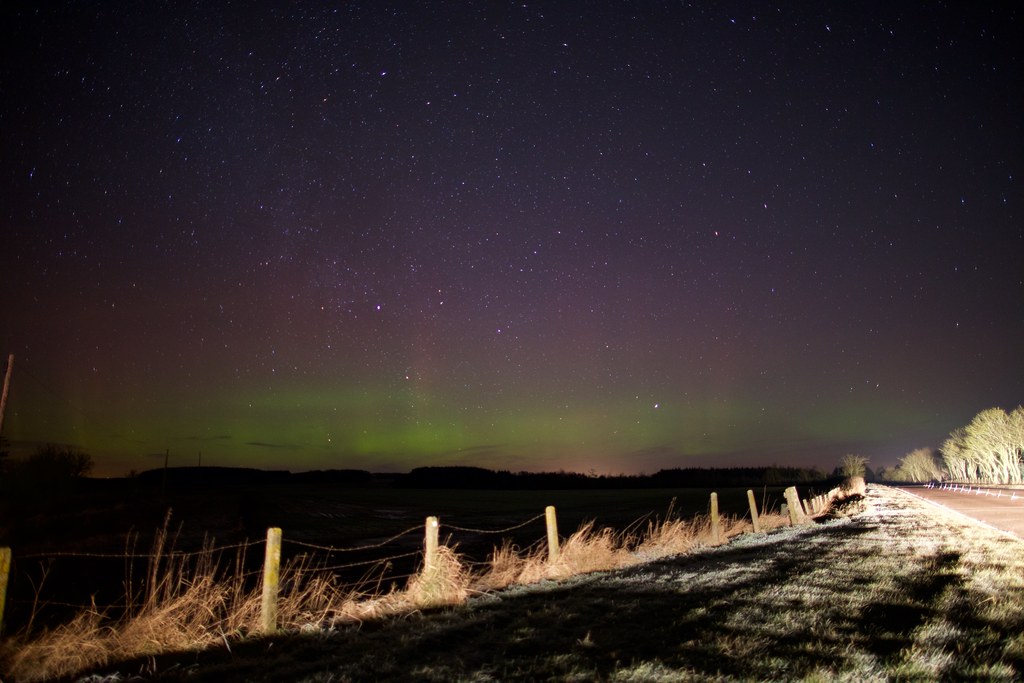
Auroras on this day in 2003 captivated skywatchers worldwide with breathtaking displays. These natural wonders are a reminder of the Earth’s dynamic atmosphere and the solar activity that fuels them.
What Causes Auroras?
Auroras are breathtaking natural light displays predominantly seen near the polar regions, and they are primarily caused by the interaction between solar winds and the Earth’s magnetic field. On this day in 2003, numerous auroras lit up the night sky, captivating observers and scientists alike.
The phenomenon begins when charged particles emitted by the sun collide with gases in the Earth’s atmosphere. This interaction results in the emission of light, creating the stunning colors typically associated with auroras, such as green, pink, and purple. The intensity and visibility of auroras can fluctuate based on solar activity, which is measured in terms of solar flares and coronal mass ejections.
Several factors contribute to the occurrence and visibility of auroras:
- Solar Activity: Increased solar activity leads to more intense auroras.
- Magnetic Field Strength: The Earth’s magnetic field plays a crucial role in directing charged particles towards the poles.
- Geographic Location: Areas closer to the poles, such as Alaska and Norway, experience auroras more frequently.
On this day, observers witnessed some of the most spectacular auroras, making it a memorable event in the study of atmospheric phenomena.
Historical Significance of Auroras
The historical significance of auroras extends beyond their breathtaking beauty; they have played a crucial role in enhancing our understanding of solar activity and its impact on Earth. Auroras on this day in 2003 serve as a vivid reminder of the powerful interactions between the sun and our planet.
In 2003, one of the most intense solar storms recorded led to spectacular displays of auroras around the globe. These events were not just visually striking; they provided valuable data for scientists studying space weather phenomena. The following points highlight the importance of these auroras:
- Scientific Research: The 2003 auroras enabled researchers to analyze solar wind patterns and their effects on the Earth’s magnetosphere.
- Technological Impact: The solar storm caused disruptions in satellite communications and power grids, underscoring the need for better preparedness against solar events.
- Cultural Significance: Many cultures have long revered auroras, linking them to myths and legends, further emphasizing their role in human history.
As we reflect on auroras on this day, we recognize their dual significance: both as natural wonders and as vital indicators of our planet’s space weather dynamics.
How to View Auroras
Viewing auroras can be a breathtaking experience, and knowing when and where to look increases your chances of witnessing these natural wonders. On this day, auroras have captivated many, especially on notable occasions like in 2003.
To enhance your aurora viewing experience, consider the following tips:
- Choose the Right Location: Find a dark area away from city lights for optimal visibility. Popular spots include national parks and remote countryside locations.
- Monitor the Forecast: Check aurora forecasts online to determine the best times for viewing. Websites and apps provide real-time updates on solar activity.
- Be Patient: Auroras can be unpredictable. Arrive early and be prepared to wait, as the display can occur at any time during the night.
- Dress Warmly: If you’re viewing in colder climates, layering your clothing will keep you comfortable during long waits.
- Bring Camera Equipment: Capture the moment with a good camera, tripod, and appropriate settings to document the stunning display of colors.
By following these tips, you can increase your chances of experiencing the awe of auroras on this day and beyond.
Impact of Solar Activity
The impact of solar activity on Earth can be profound, especially during significant events such as the auroras on this day in 2003. The connection between solar flares and geomagnetic storms is crucial for understanding why such spectacular light displays occur.
On this particular day, heightened solar activity created an extraordinary opportunity for aurora sightings across various regions. The increase in solar wind resulted in a stronger interaction with the Earth’s magnetic field, producing vivid colors streaking across the night sky.
- Increased Visibility: Reports indicated that auroras were visible much farther south than usual, captivating audiences in areas that typically do not experience such phenomena.
- Scientific Observations: Researchers took advantage of this rare event to collect data, enhancing our understanding of solar-terrestrial interactions.
- Public Interest: The widespread visibility of auroras sparked interest among the general public, leading to increased participation in astronomy events.
As a result, the auroras on this day not only provided stunning visuals but also underscored the significant influence of solar activity on Earth’s atmosphere and environment.
Auroras Around the World
Auroras on this day captivated skywatchers across the globe in 2003, providing stunning displays of natural light that illuminated the night. From North America to Europe, the phenomenon was visible in regions where auroras are typically rare.
In the United States, particularly in states like Alaska and Minnesota, residents were treated to vibrant colors dancing across the sky. Reports indicated that the auroras were so bright that they could be seen as far south as Texas, offering an exceptional opportunity for those unaccustomed to such celestial spectacles.
Meanwhile, in Canada, the auroras painted the northern lights with hues of green, pink, and purple, creating a breathtaking backdrop for photographers and nature enthusiasts. Notably, locations such as Yellowknife and Whitehorse became popular destinations for tourists eager to witness the natural wonder.
Across the Atlantic, Europe experienced similar excitement, with sightings reported in the UK, Norway, and Sweden. The extraordinary intensity of the auroras on this day was attributed to heightened solar activity, making it a memorable event for both scientists and the public alike.
Memorable Auroras in 2003
In 2003, several spectacular auroras graced the skies, leaving a lasting impression on both the scientific community and skywatchers alike. On this day, the cosmic dance of lights was particularly vibrant, showcasing nature’s artistry at its finest.
Some of the most memorable auroras on this day included:
- March 19, 2003: A strong geomagnetic storm resulted in breathtaking displays witnessed across parts of North America and Europe, with vivid reds and greens illuminating the night sky.
- October 29, 2003: Following a massive solar flare, observers reported one of the brightest auroras in recent history. Locations as far south as Texas and Florida experienced glowing skies, captivating thousands.
- November 3, 2003: Another powerful solar event led to stunning nocturnal displays, with reports of auroras reaching deep into the southern hemisphere, extending visibility for many.
These events not only allowed enthusiasts to marvel at auroras on this day but also contributed to our understanding of solar activity and its effects on Earth’s atmosphere.
Auroras on this day have captivated skywatchers for centuries, and the events of 2003 were particularly remarkable. Many enthusiasts still recall the vivid displays of light that characterized Auroras on this day, making it a memorable year in the history of auroral phenomena.
By p_c_w via Openverse
Where this came from
You might also like
Voting Misinformation Spread: The Real Impact Before Elections · Indian Biennale 2026 Venue: Smart Addition to Delhi’s Art Scene · Uber bike intercity: Is it the best new travel option?