
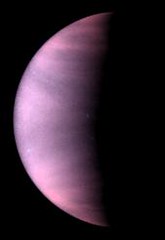
Venus acid clouds may not be as inhospitable as previously thought. Recent studies suggest that these clouds could harbor conditions more favorable for life than imagined.
Understanding Venus’s Atmosphere
Venus’s atmosphere has long been viewed as a hostile environment, primarily due to the presence of thick clouds composed of sulfuric acid. However, recent studies suggest that these Venus acid clouds may not be as inhospitable as previously thought. The clouds create a complex and dynamic climate that has intrigued scientists for decades.
One of the most striking features of Venus’s atmosphere is its extreme pressure, which is about 92 times greater than Earth’s at sea level. This high pressure, coupled with surface temperatures averaging around 900 degrees Fahrenheit, has led to the assumption that life could not exist there. Yet, the upper layers of the atmosphere, where the acid clouds reside, present a different scenario.
In the cloud layers, conditions such as temperature and pressure can be more moderate. Researchers are exploring the possibility that microbial life could thrive within these acidic clouds, utilizing sunlight and chemical reactions to sustain themselves. Additionally, the presence of phosphine—a gas often associated with biological processes—has been detected, raising further questions about the potential for life.
Understanding the composition and behavior of Venus’s atmosphere is crucial for unraveling the mysteries of its acid clouds and their implications for astrobiology. As research continues, scientists remain hopeful about the prospects of discovering life in unexpected environments.
The Composition of Acid Clouds
The composition of Venus’s acid clouds is a topic of growing interest among researchers, as these clouds play a crucial role in the planet’s atmosphere and potential habitability. The primary component of these clouds is sulfuric acid, which is formed from the interactions of sulfur dioxide and water vapor. This unique chemistry results in a highly reflective layer that encases the planet, impacting both its temperature and visibility from space.
Scientists have identified several key elements within the acid clouds:
- Sulfuric Acid: The dominant acid in the clouds, contributing to their corrosive nature.
- Water Vapor: Present in smaller quantities, it is essential for the formation of sulfuric acid.
- Trace Gases: Includes compounds like carbon dioxide and nitrogen, which influence the cloud chemistry and dynamics.
Recent studies suggest that the presence of these acid clouds may not be as inhospitable as once thought. The thick cloud layer creates a stable environment that could potentially shield microorganisms from harmful solar radiation. Furthermore, the temperature within the clouds is relatively moderate compared to the scorching surface of Venus, raising intriguing questions about the possibility of life in these acid clouds.
Potential for Life in Harsh Environments
The discovery of Venus acid clouds has sparked renewed interest in the potential for life in seemingly inhospitable environments. Despite the extreme conditions, researchers are exploring the possibility that microbial life could exist within these dense clouds. Recent studies suggest that certain extremophiles on Earth, organisms that thrive in harsh environments, may offer clues about life on Venus.
Scientists have identified several factors that could support life in the acid clouds of Venus:
- Temperature Stability: The upper atmosphere of Venus maintains a relatively stable temperature, hovering around 30 degrees Celsius (86 degrees Fahrenheit), which may be conducive to microbial survival.
- Chemical Nutrients: The presence of sulfuric acid and other chemicals in the clouds can provide potential nutrients for life forms that have adapted to such conditions.
- Potential Energy Sources: Chemical reactions within the clouds might offer energy sources similar to those utilized by extremophiles on Earth, suggesting a possibility for metabolic processes.
As researchers continue to analyze the atmosphere of Venus, the concept of life existing in acid clouds becomes increasingly plausible. This paradigm shift challenges our understanding of life’s boundaries and opens the door to new explorations of astrobiology beyond our planet.
Recent Discoveries in Planetary Science
Recent studies have shed new light on the enigmatic acid clouds of Venus, challenging long-held assumptions about the planet’s inhospitable environment. Researchers have begun to explore the possibility that these clouds, rich in sulfuric acid, might not be the dead end previously thought for potential life.
A team of scientists analyzing data from various missions, including the European Space Agency’s Venus Express, discovered intriguing chemical processes within these clouds. They noted that the presence of certain organic molecules could indicate a more complex atmosphere than previously believed. This revelation suggests that the acid clouds may harbor conditions that could sustain microbial life, albeit in forms vastly different from those on Earth.
The implications of these findings are significant for planetary science. They highlight the need to revisit the criteria by which we assess habitability beyond our own planet. Some key points raised in recent discussions include:
- Potential for microbial ecosystems: The unique chemistry of Venus’s atmosphere may support life forms that thrive in extreme conditions.
- Comparative planetology: Understanding Venus’s atmosphere can provide insights into similar processes on other celestial bodies.
- Future exploration: Missions targeting the acid clouds could offer new opportunities for discovery.
As research continues, the notion of Venus as a potentially hospitable environment is gaining traction in the scientific community.
Implications for Future Exploration
The recent findings regarding Venus acid clouds have significant implications for future exploration of the planet. As scientists continue to unravel the mysteries of Venus’s atmosphere, these revelations may reshape our approach to astrobiology and planetary research.
One of the most compelling aspects of the acid clouds is their potential to support microbial life, which could thrive in extreme conditions previously thought inhospitable. This opens up new avenues for exploration, prompting missions that could focus on:
- Sample Collection: Future missions could aim to collect cloud samples, allowing for the analysis of chemical signatures that indicate biological activity.
- In-situ Measurements: Instruments designed to operate within the acidic environment could provide real-time data on the atmospheric composition and its variations.
- Long-term Monitoring: Establishing a presence in the upper atmosphere could facilitate continuous observation of Venus’s conditions, leading to deeper insights.
The prospect of life existing in such harsh environments challenges our understanding of astrobiology and expands the search for extraterrestrial life beyond traditional boundaries. As we prepare for upcoming missions, the study of Venus acid clouds will undoubtedly play a crucial role in guiding our exploration strategies and scientific objectives.
Comparative Analysis with Earth
The study of Venus’s acid clouds offers an intriguing comparative analysis with Earth, highlighting both the stark differences and surprising similarities between the two planets. While Earth is home to a diverse array of life forms thriving in its balanced ecosystem, Venus presents a more hostile environment dominated by sulfuric acid clouds. However, this does not entirely negate the potential for life in such extreme conditions.
In examining the atmospheres of both planets, researchers have noted that the composition of Venus’s acid clouds, primarily consisting of sulfuric acid droplets, may provide a unique microenvironment. Earth’s atmosphere, primarily nitrogen and oxygen, supports life through its stable conditions. Conversely, Venus’s atmosphere is dense and hot, with surface temperatures exceeding 450 degrees Celsius.
Despite these challenges, astrobiologists are exploring the possibility that microbial life could exist within the upper layers of Venus’s acid clouds. This section of the atmosphere experiences slightly more temperate conditions, raising questions about the resilience of life forms in extreme environments.
- Comparison of conditions: Earth’s stable climate vs. Venus’s harsh acid clouds.
- Microbial potential: Life in extreme environments on both planets.
- Future implications: Insights for future exploration and astrobiology.
As research evolves, the understanding of Venus’s acid clouds could redefine our approach to life beyond Earth.
Recent studies suggest that the Venus acid clouds may harbor microbial life, challenging our understanding of where life can thrive. The unique composition of these Venus acid clouds could provide the necessary conditions for organisms to exist in this harsh environment.
By NASA Goddard Photo and Video via Openverse
Read the original
Related reading
Galaxy S27 storage configurations: What’s the best option? · Is the Trump Xi summit the Best Opportunity for Real Progress? · Top Business Stories: Proven Insights You Can’t Miss